aktuelle Ausstellungen
Wenn Sie etwas veröffentlicht wissen wollen, schreiben Sie bitte an
Nikola Fölster >
Vielen Dank!

Zwiegespräche – mit Fotografien von Corina Gertz
Krefeld ( D ) > 16.02. - 10.08.2025
Die in Düsseldorf lebende Künstlerin Corina Gertz verfolgt ihr globales Langzeitprojekt mit dem Titel „Abgewandtes Porträt“ (“Averted Portrait“) und bereist dafür viele Länder, unter anderem in Europa, Ost- und Südostasien und Afrika. In stets gleicher Weise und Proportion porträtiert Gertz zumeist Frauen in traditioneller Kleidung und Tracht, als Hüftbild in Rückenansicht vor schwarzem Hintergrund. Mit ihren Rückenporträts schafft sie Bilder von großer Schönheit und sichtbarer kultureller Differenz. Durch die Abwendung der Porträtierten richtet sich der Blick der Betrachter*in nicht auf das Gesicht der Dargestellten und wird so abgelenkt, sondern konzentriert sich auf die Körperhaltung, die Kleidung, die materielle Qualität der Textilien und Accessoires. Das Deutsche Textilmuseum hat die Düsseldorfer Fotokünstlerin zu einer gemeinsamen Ausstellung eingeladen, in der 23 ihrer „abgewandten Porträts“ 150 Objekten der Krefelder Sammlung aus unterschiedlichen Kulturkreisen und Zeitabschnitten gegenüber im Dialog stehen. Die Auswahl der Fotografien und der Objekte durch das Kuratorenteam des Museums geschah nach ästhetischen, assoziativen Kriterien. Manches Schmuckstück wird zu einer Tracht getragen, ist aber in der Rückenansicht der Fotografie nicht zu sehen. Manche Muster und Symbole sind durch Handel und Tausch von Asien oder Europa in andere Teile der Welt getragen worden und finden Eingang in traditionelle Kleidung. Trachtendekore wirken wiederum auf die Mode …
Text - und Bildquelle: Museumswebsite (Foto: © Corina Gertz)
Veranstalter/ Ort
Deutsches Textilmuseum Krefeld
Andreasmarkt 8
47809 Krefeld
Deutschland
weitere Infos: www.deutschestextilmuseum.de/

Paul Poiret. La mode est une fête
Paris (F) > 25.06.2025 - 11.01.2026
The Musée des Arts Décoratifs presents its first major monograph dedicated to Paul Poiret (1879-1944), a key figure in Parisian haute couture at the beginning of the 20th century. Paul Poiret, regarded as the liberator of the female body for removing the corset, revolutionized fashion. The exhibition Paul Poiret. Fashion is a Feast is an immersive journey into the creator’s rich universe, from the Belle Époque to the Roaring Twenties. It explores his creations in the fields of fashion, decorative arts, perfume, celebration, and gastronomy. Through 550 works (clothing, accessories, fine and decorative arts), the exhibition highlights his lasting influence and reveals the extent of his creative genius. It is a fascinating journey into the world of a man whose legacy continues to inspire contemporary fashion designers, from Christian Dior in 1948 to Alphonse Maitrepierre in 2024.
Text - und Bildquelle: Museumswebsite
Veranstalter/ Ort
Musee Les Arts decoratif
107, rue de Rivoli
75001 Paris
Frankreich
weitere Infos: madparis.fr/Paul-Poiret-Fashion-is-a-Feast
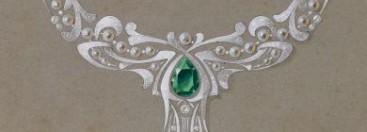
Jewellery Designs Secrets of the creation
Paris (F) > 01.04. - 20.07.2025
For the first time, the Petit Palais reveals the diversity and breadth of its collection of drawings of jewellery designs, spanning over a century of creation, from the second half of tthe 19th to the mid-20th century. Through a remarkable selection of designs from a collection comprising over 5,500 works, this exhibition showcases the wealth of a collection amassed since the late 1990s and preserved in the museum’s reserves, away from the public spotlight. Featuring drawings by designers like Pierre-Georges Deraisme and Charles Jacqueau, as well as those by prestigious jewellery houses such as Boucheron, Cartier, Rouvenat, and Vever, this exhibition bears witness to the evolution of styles and techniques in the field of jewellery. It is part of an original programme, aimed at highlighting the Petit Palais’ exceptional graphic art collection.
Text - und Bildquelle: Museumswebsite
Veranstalter
Palais Galliera
Ort
Petit Palais
Avenue Winston Churchill
75008 Paris
Frankreich
weitere Infos: www.petitpalais.paris.fr/en/expositions/jewellery-designs
Worth. Inventing haute couture
Paris (F) > 07.05. - 07.09.2025
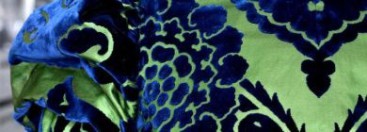
For the first time, the Palais Galliera is joining forces with the Petit Palais to present an exceptional exhibition dedicated to the House of Worth. Charles Frederick Worth (1825-1895), born in England, was a key figure in the history of fashion and the founder of a fashion house that became the epitome of Parisian luxury. At the origin of haute couture, Worth founded his eponymous house at 7 rue de la Paix, whose history spans four generations and almost a century. Spread over 1100 m2 in the grand galleries of the Petit Palais, this retrospective brings together more than 400 works - clothing, objects and accessories, paintings and graphics - to create a vast fresco of the creations of the House of Worth, as well as the protagonists who have written its history. It promises to be an exceptional exhibition, given the fragility of the pieces on display, the number of silhouettes (almost 80) and the way in which a world in the making and its legacy are portrayed, based on extensive documentation. From the Second Empire to the Roaring Twenties, a page of history is being written: that of the invention of the figure of the great couturier and of the mechanisms for creating and marketing fashion that are still in force and whose foundations were laid by Worth at the end of the 19th century.
Text - und Bildquelle: Museumswebsite
Veranstalter
Palais Galliera
Ort
Petit Palais
Avenue Winston Churchill
75008 Paris
Frankreich
weitere Infos: www.petitpalais.paris.fr/en/expositions/worth-0
Jeanne Lanvin: Haute Couture Heritage
Atlanta (USA) > 04.04. - 31.08.2025
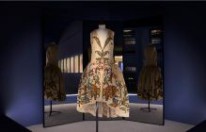
The first exhibition in the U.S. dedicated to Jeanne Lanvin (b. 1867, Paris; d. 1946, Le Vésinet, France), Haute Couture Heritage showcases more than 60 garments, illustrations, and photographs spanning the height of her practice. Drawing from the collections of Fondation Azzedine Alaïa and Lanvin Heritage, the exhibition thoughtfully reflects on the couturier’s vast knowledge of silhouettes, fabric variations, and cutting techniques to highlight rich nuances in color, texture, transparency, and embellishment. The virtuosity of Lanvin’s craftsmanship lies in her eye for details and expertise in appliqué work, inlays, topstitching, and embroidery. The pure, refined shapes of her signature robes de style, as well as the evocative graphic patterns of her evening coats and capes, harmonize with the delicacy and subtleties of the Art Deco movement. Lanvin’s distinctive ability to craft elegance with simplicity remains the hallmark of her house and enduring legacy. Jeanne Lanvin: Haute Couture Heritage is curated by Gaël Mamine of Fondation Azzedine Alaïa in collaboration with Lanvin Archives, Parodi Costume Collection, and SCAD FASH creative director Rafael Gomes.
Textquelle: Museumswebsite, Photo by Julien Vidal
Veranstalter/ Ort
SCAD FASF Museum of fashion +Film
1600 Peachtree St. NW
Atlanta, GA 30309
Georgia
USA
weitere Infos: www.scadfash.org/exhibitions/jeanne-lanvin-haute-couture-heritage
Dior. La Galerie
Paris (F) > Dauerausstellung (+ wechselnde Sonderausstellungen)
Un sublime parcours d'exposition à l'adresse historique de la Maison de couture. La Galerie Dior, c'est le spot à ne pas manquer pour les amoureux de la mode à Paris! Située dans l'hôtel particulier historique du 30 Montaigne, elle invite les visiteurs à plonger au cœur de l'univers fabuleux de la Maison Christian Dior. Entre héritage(s) et réinvention, découvrez le nouveau parcours d'exposition de l'écrin culturel, à travers une succession de scénographies immersives réunies dans ce véritable petit musée.
Veranstalter/ Ort
La Galerie Dior
11, rue François 1er
Paris 8e
Frankreich
weitere Infos: www.galeriedior.com/de

9. Europäische Quilt-Triennale
St. Gallen (CH) > 23.05. - 14.09.2025
45 zeitgenössische Quilt- und Textilkunstwerke aus elf Nationen zeigen in dieser Schau, dass Kreativität, künstlerische Inspiration und zeitkritische Aussagen nicht allein der Malerei, Bildhauerei, Grafik und Fotokunst vorbehalten sind. Ausgewählt wurden die hochkarätigen Exponate von einer fünfköpfigen internationalen Jury aus über 130 Einsendungen. Die Entwicklung der Kunstform „Quilt“ von der überwiegend funktionalen Decke hin zum autonomen Kunstwerk innerhalb der letzten 50 Jahre ist beeindruckend. So findet sich in der Ausstellung Raumgreifendes und zugleich Politisches in Form eines Bodenobjektes mit dem Titel „Eisbär, ich möchte kein Eisbär sein, im warmen Polar“. Erfreulich hoch war der hohe Anteil junger Bewerberinnen, von denen es sieben Künstlerinnen in die Ausstellung geschafft haben. In die Slowakei ging der Preis für talentierte Nachwuchsquilterinnen für eine dreidimensionale Arbeit, die sich mit dem Zusammenhalt der Generationen beschäftigt.
Text- und Bildquelle: Museumswebsite
Veranstalter/ Ort
Textilmuseum St. Gallen
Vadianstrasse 2
9000 St.Gallen
Schweiz
weitere Infos: www.textilmuseum.ch/9quilt/

Mode & Interieur. A Gendered Affair.
Antwerpen (B) > 29.03. - 03.08.2025
In der Haushaltsideologie des 19. Jahrhunderts spielte die Frau eine wichtige Rolle als „Verschönerin” ihrer selbst und ihres Hauses. Um Gemütlichkeit und Komfort zu erzeugen, dekorierte sie die Einrichtung mit weichen Kissen, allerlei Textilien, drapierten Stoffen, Handarbeiten und Schmuckgegenstände. Auch ihren Körper überlud sie mit vielen Stoffschichten und Posamenten. Sie ging völlig in ihrer Einrichtung auf und drohte manchmal sogar darin zu verschwinden. Diese visuelle Verschmelzung wurde etwas durchdachter konzipiert, als einige männliche Designer wie u. a. Henry van de Velde begannen, Damenkleidung zu entwerfen. Sie strebten nach Harmonie, stimmten zu diesem Zweck Architektur, Möbel, Dekoration, Kleidung und Accessoires aufeinander ab und schufen so ein Gesamtkunstwerk. Auch modernistische (Innen-) Architekten wie Adolf Loos, Lilly Reich und Le Corbusier ließen ihre Auffassung von Design in die Mode einfließen. Bei ihnen stand jedoch die Funktionalität im Fokus, Ornamentierung hingegen lehnten sie ab. Einen kritischen Blick auf die historische Beziehung zwischen Inneneinrichtung und Mode ermöglichen die in der Ausstellung präsentierten zeitgenössischen Kreationen von u. a. Maison Martin Margiela, Ann Demeulemeester, Raf Simons und Hussein Chalayan.
Text - und Bildquelle: Museumswebsite (Foto © Craig McDean/Art+Commerce)
Veranstalter/ Ort
MoMu
Nationalestraat 28
2000 Antwerpen
Belgien
weitere Infos: www.momu.be/de/exhibitions/mode-interieur?ct=t%28email_newsletter_alg_04_2025_en%29&mc_cid=7f1c7c2023&mc_eid=f7cff48d5e
Woven Histories Textiles and Modern Abstraction
New York (USA )> 15.04. - 13.09.2025
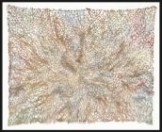
Textiles touch every aspect of our lives and connect us to history. “Threads were among the earliest transmitters of meaning,” the artist Anni Albers wrote in 1965. Woven Histories: Textiles and Modern Abstraction reveals the links between this art form and abstraction. Incorporating basketry, apparel, and more than a century of other textile works that challenge accepted divisions between fine art and craft, this exhibition broadens the story of abstraction, suggesting that not only ideas but materials—like woven, knotted, and braided fabric—are crucial to its understanding and success. Spanning early-20th-century works by Sonia Delaunay, Hannah Hoch, and Sophie Taeuber-Arp, whose textile practices parallel their painting and drawing, mid-century works by Albers and Ed Rossbach, and contemporary works by Rosemarie Trockel, Andrea Zittel, and Igshaan Adams, this exhibition brings together more than 150 diverse, interdisciplinary objects. Highlighting issues of labor and identity that are intertwined with modern textile production, Woven Histories argues that weaving and textiles are the quintessential link between lived experience and art.
Text - und Bildquelle: Museumswebsite
Veranstalter/ Ort
MOMA
11 West 53 Street,
Manhattan
New York City
USA
weitere Infos: www.moma.org/magazine/articles/1210

Fashion on the Move #3
Paris (F) > 08.02. - 12.10.2025
From 8 February to 12 October 2025, the Palais Galliera is presenting the third and final part of its collections exhibition Fashion on the Move. With more than 180 new items from the museum's collections on display, the exhibition retraces the history of fashion from the eighteenth century to the present day, exploring the way in which fashion has adapted to the body in movement. The focus of this installation is winter sports.
Garments designed for physical activity and sport through the ages are compared with clothes that people wore in everyday life. It is a dialogue that takes in the concept of specialised sportswear, from the adaptation of women's outfits for sporting activities in the late 19th century to the masculinisation of women's clothing and the introduction of sportswear in the modern wardrobe. Swimming costumes, cycling outfits and riding habits, motoring coats and accessories, tennis wear and sneakers are just some of the silhouettes used to illustrate three centuries of fashion history. Fashion on the Move #3 is more than just a chronological review of the history of clothing; it offers insights into how the liberation of the body led to changes in attitudes and standards of beauty. A large section of this last instalment of the exhibition is devoted to winter sports, tracing the emergence of high-altitude resorts and the development of new winter sports such as skiing, tobogganing, ice hockey, ice skating and sledding, as well as the gradual emergence of specially adapted outfits and accessories from specialist equipment manufacturers (including Rossignol, Tunmer and Mavest), fashion houses (including Hermès, Jean Patou and Madeline de Rauch) as well as collaborations between the two. This section is also an opportunity to discover the museum's extensive collection of down jackets, ski suits, stirrup ski pants and knitted accessories. The exhibition has benefited from exceptional loans from CHANEL, the Musée National du Sport (Nice), the Bibliothèque Forney, the Bibliothèque historique de la Ville de Paris, the Musée Carnavalet - Histoire de Paris, the Fondation Azzedine Alaïa, the Émile Hermès collection, Patrimoine Hermès, the Balenciaga Archives, Jean-Charles de Castelbajac, Fusalp and Le Coq Sportif. These guest items bring added perspective to the Palais Galliera's own pieces that bear witness to exercise and sports activities through the ages, whether competitive or for leisure.
Text - und Bildquelle: Museumswebsite
Veranstalter/ Ort
Palais Galliera
10 av. Pierre 1er de Serbie
75116 Paris
Frankreich
weitere Infos: www.palaisgalliera.paris.fr/en/exhibitions/fashion-move-3
Seite 3 von 13