

aktuelle Ausstellungen
Wenn Sie etwas veröffentlicht wissen wollen, schreiben Sie bitte an
Nikola Fölster >
Vielen Dank!
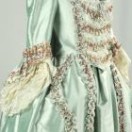
L'étoffe des Lumières Vêtements et accessoires au XVIIIe siècle
Montmorency ( F ) >05.04.2025 -26.10.2025
The Musée Jean-Jacques Rousseau invites you to discover elegance in the 18th ecentury.
Carried out in partnership with La Dame d’Atours, a specialist in historical reconstruction,
this exhibition highlights the changes in clothing at the time.through a selection of costumes, accessories, engravings and paintings.
Between aristocratic pomp and the quest for simplicity, the fashion of the eighteenth ecentury reflects the upheavals of a changing society. This contrast echoes the thought of Jean-Jacques Rousseau, familiar with literary salons but fervent defends authenticity in the face of artifices.
At the crossroads of fashion, social history and the arts, fine costumes interact with exceptional loans from the Cognacq-Jay Museum and the Montbertan collections. This journey enriched with playful devices invites young and old to discover this fascinating era in all seams.
Text - und Bildquelle : Museumswebsite
Musée Jean-Jacques Rousseau
5, rue Jean-Jacques Rousseau, 95160 Montmorency
Frankreich
weitere Infos: www.ville-montmorency.fr/mes-loisirs/musee-jean-jacques-rousseau/expositions
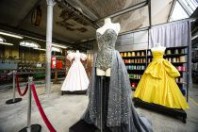
Bonnet Silk Museum
Jujurieux ( F)> Dauerausstellung
Discover the wealth of fabrics, the secrets of their manufacture and the trades that brought them to life at the Musée des Soieries Bonnet. A multicolored, shimmering heritage, a piece of working-class life and an industrial history emblematic of the Lyon region. The museum invites you on a journey between the sensuality of the materials and the exceptional skills of the weavers, spinners and seamstresses.
Close to the capital of silk and its famous Canuts, this boarding mill wove miles of delicate silks, rich taffetas, fragile muslins… sumptuous, shimmering fabrics that made fashion from the mid-19th to the early 21st century. Bonnet silks have inspired the greatest haute couture houses, from Dior to Chanel, from Yves Saint-Laurent to Lanvin, from Lacroix to Valentino…
You’ll be dazzled by the beauty and richness of the fabrics and garments on display at the museum, veritable works of art celebrating the excellence of an internationally recognized savoir-faire.
You’ll be amazed by the closed-circuit organization and complexity of the weaving looms.
Text - und Bildquelle : Museumswebsite
Bonnet Silk Factories
19 bis rue Claude Joseph Bonnet, Parking Place Marcel GRILLET,
01640 Jujurieux
Frankreich
Rick Owens, Temple of Love
Paris ( F ) > 28.06.2025 - 04.01.2026
The Palais Galliera is holding the first exhibition in Paris dedicated to the work of avant-garde fashion designer Rick Owens. It features collections from his early beginnings in Los Angeles through to his most recent. With a fascination for spiritual ritual, his creations draw on a wide range of references, from Joris-Karl Huysmans to modern and contemporary art, as well as the great Hollywood films of the early 20th century. Rick Owens himself is the exhibition's artistic director and he has worked with the curation of the Palais Galliera to create an exhibition trail that extends to the façade of the museum as well as its garden.
Text - und Bildquelle : Museumswebsite ( Foto © Rick Owens)
Palais Galliera
Musee de la Modes
10 av. Pierre 1er de Serbie
75116 Paris
Frankreich
weitere Infos: www.palaisgalliera.paris.fr/en/exhibitions/rick-owens-temple-love
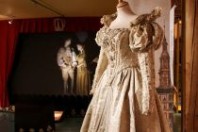
The Art of Transformation
Oslo ( N ) > Dauerausstellung
Discover treasures from our collection of costumes and stage design models, spanning from 18th century Christiania through interwar Paris and up to our own time.
On stage, anything is possible! Through the illusions made by the actors and the audience’s imaginations, time and space are transformed: an ordinary woman becomes a supernatural being, and decorative buttons turn into gems.
In this exhibition, you can see original props and costumes used in historical plays by well-known writers such as Ludvig Holberg and Bjørnstjerne Bjørnson. Original stage design models from productions of Ibsen and Shakespeare plays demonstrate how scenography has changed over time.
Text - und Bildquelle : Museumswebsite ( Foto : © Mari Rosenberg )
The Theatre Museum
Halvdan Svartes gate 58
Oslo
Norwegen
weitere Infos: www.oslomuseum.no/en/whats-on/the-art-of-transformation/
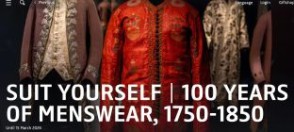
Suit Yourself | 100 years of menswear, 1750-1850
Amsterdam (NL) > 22.03.2025 - 15.03.2026
The intimate spotlight exhibition Suit Yourself presents the exuberant finery worn by flamboyant Dutch men in the 18th and 19th centuries, made with striped velvet, floral embroidery and rich silk fabrics. Men’s fashions in the 18th century were by no means understated, and the influence of the ‘macaroni’ from 1760 to 1780 soon caught on in the Netherlands. Worn mostly by wealthy men, the style was all about vivid colours and contrasting fabrics. Clothing also reflected the beauty ideal of that era: a blue waistcoat decorated with intricate embroidery, for example, incorporates a cardboard band that accentuates the length of the torso. The Dutch creators and wearers of these fashion items drew their influences from near and far. Heavy silk damask fabrics were woven and worn locally, while inspiration also came from Turkish motifs and other international sources. The Dutch East India Company (VOC) imported exclusive fabrics such as silk, cotton and linen to the Netherlands, through a process that often involved violence and oppression. The French Revolution (1789–1799) led to more subdued fashions, as soldiers in uniform became the models of masculinity. Relatively subtle displays of wealth remained visible in the detailing, however, with items such as waistcoats featuring double rows of buttons. In the 19th century, styles were further influenced by industrialisation, which increased the availability of fabrics and ready-to-wear clothing. This period also saw a flourishing market for second-hand fashions. One exceptional example of this recycling phenomenon is a waistcoat made of hand-painted Chinese silk from an 18th-century dress.
Text - und Bildquelle: Museumswebsite
Veranstalter/ Ort
Rijksmuseum
Museumsstraat 1
1071XX Amsterdam
Niederlande
weitere Infos: www.rijksmuseum.nl/en/whats-on/exhibitions/suit-yourself-or100-years-of-menswear-1750-1850
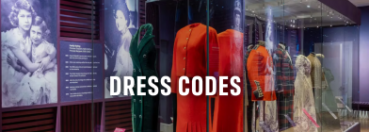
Dress Codes
London (GB) > bis 30.11.2025
Decoding the Royal Ceremonial Dress Collection, Discover never-before-seen royal fashion treasures in Dress Codes, a new exhibition at Kensington Palace. Explore the codes and conventions of royal clothing, and the powerful impact fashion can make when boundaries are pushed and dress codes evolve. Among the highlights of this exciting new exhibition are pieces worn by a young Queen Elizabeth II, Diana, Princess of Wales, Dame Vivienne Westwood, Princess Margaret and Queen Victoria. Dress Codes showcases both recognisable and rarely-seen treasures from the Royal Ceremonial Dress Collection, a collection of 10,000 objects spanning 500 years, cared for by Historic Royal Palaces. Stunning items from the Royal Ceremonial Dress Collection on display in 2025 include an extremely rare Japanese court suit dating from the early 20th century, and a never-before-seen 1920s Reville court dress worn to Buckingham Palace. Alongside these spectacular examples of royal and court dress, discover how dress codes can be reset and re-made for today through designs by our Young Producers, aged 14-17. This new partnership with local youth groups paves the way for a new generation of young people to contribute to the arts and fashion industries. Dress Codes has been generously supported by our Associate Partners, the Blavatnik Family Foundation and Avis Charles Associates.
Text - und Bildquelle: Museumswebsite
Veranstalter/ Ort
Kensington palace
London
Großbritannien
weitere Infos: www.hrp.org.uk/kensington-palace/whats-on/dress-codes/?fbclid=IwZXh0bgNhZW0CMTEAAR06eDvQF845v2RHJ1iWveR-z5NwtsQHl5uHg4LE0ziOJENOyPsoulsKJTc_aem_v0WgX7oB3om8WCjCP3re5A#gs.mtrdpm
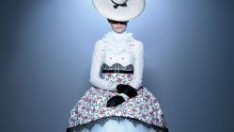
DIRNDL - Tradition goes Fashion
Augsburg (D) > 04.04. - 19.10.2025
Ein Dirndl ist mehr als nur ein Kleid. Es steht einerseits für bayerische Tradition, Geschichte und Handwerkskunst. Andererseits ist es heute ein modisches Statement – mit innovativen Designs und Akzenten. Tradition goes Fashion – und das Dirndl steht im Mittelpunkt. In einer opulenten Ausstellung lädt das tim auf einen modischen Streifzug ein, der vom 19. Jahrhundert bis in die Gegenwart reicht. Auf mehr als 1.000 Quadratmetern Ausstellungsfläche können Besucherinnen und Besucher eintauchen in die wechselvolle Entwicklungsgeschichte des Dirndls, seine Ursprünge, politischen Vereinnahmungen und aufregenden Neuinterpretationen. Zu erleben sind neben historischen Dirndln auch heutige High-Fashion Modelle junger Designerinnen und Designer, die durch beeindruckende Entwürfe völlig neue modische Statements setzen.
Text - und Bildquelle: Museumswebsite
Veranstalter/ Ort
tim | Staatliches Textil- und Industriemuseum Augsburg
Provinostraße 46
86153 Augsburg
Deutschland
weitere Infos: www.timbayern.de/ausstellungen/dirndl-tradition-goes-fashion/?cn-reloaded=1
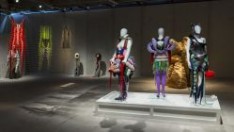
Social Fabric
Espoo (FIN) > 23.05. - 07.12.2025
Social Fabric brings together a group of contemporary fashion designers and artists that explore the cultural fabric of fashion, and its rituals and trepidations. Contemporary fashion designers are spearheading a new critical way of making and consuming fashion. They are exploring complex cultural issues as well as the role of fashion in society. Fashion is part of our everyday life, and it speaks volumes of our connections. Even a single item of clothing can link us to communities and networks; and how we consume and produce fashion is tied to complex cultural behaviours, locally and globally. Fashion feeds on collective consumption where we use objects to show social status. In contrast, fashion also connects us in proactive and critical communities where creating is an act of activism that expresses solidarity and resistance. The exhibition presents fashion, textile art, sculpture and film. It includes both established and emerging designers and artists from the Nordics and Northern Europe. This exhibition is the third instalment of a wider, ongoing Nordic collaboration between the Danish fashion organization ALPHA, the Swedish design and craft heritage museum Röhsska, the National Museum of Norway in Oslo, the Copenhagen Contemporary art center in Denmark, and EMMA – Espoo Museum of Modern Art.
Text - und Bildquelle: Museumswebsite (Foto © Paula Virta)
Veranstalter/ Ort
EMMA Museum
Exhibition Centre WeeGee
Ahertajantie 5, Tapiola
Espoo
Finnland
weitere Infos: emmamuseum.fi/en/exhibitions/social-fabric/
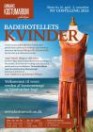
Costumes from Badehotellet
Svendborg (DK) > 16.04. - 02.11.2025
On 16 April, the season 2025 opens in the Danish Costumearium, with the large exhibition of costumes from Badehotellet, focusing on the women of the Badehotel. Get up close and personal with the original costumes and experience how costume designer Margrethe Rasmussen’s stylish details and cuts have helped to tell all the good stories. Behind the Costumeriet is the association Denmark's Kostumarium - not just for desire. The association's board of directors runs the museum and the administration. This year's two major exhibitions are curated by tailor Michael Nøhr.
Text- und Bildquelle: Museumswebsite
Veranstalter/ Ort
Danmarks Kostumarium
Frederiksø 16C, 2.sal
5700 Svendborg
Dänemark
weitere Infos: www.kostumarium.dk/
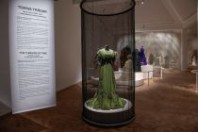
Threads of Time – Fashion and Style 1870–1940
Helsingborg (S) > 13.04.2025 - 08.02.2026
Dunkers Kulturhus is showing for the first time a larger number of dresses from Helsingborg Museum's collection. The majority have never been exhibited before. The selection consists of dresses, accessories and outerwear from the 1870s to the 1940s. With texts by fashion historian Tonie Lewenhaupt, among others, the visitor is guided through the exhibition from Victorian tournament fashion to fashion inspired by film stars in the 1930s. The history of clothing is part of a story about a place in change and shows how a small provincial town abandons its small-town attire in favor of dressing like a continental metropolis. What the dresses had in common was that they were part of a culture where seeing and being seen was highly valued. In the new city, environments were created for the dressed-up to be seen in, where the city theater's premieres, the concerts in the fountain parks and the art openings were important occasions.
Text - und Bildquelle: Museumswebsite
Veranstalter/ Ort
Dunkers Kulturhus
Kungsgatan 11
Helsingborg
Schweden
weitere Infos: dunkerskulturhus-se.translate.goog/utstallning/tidens-tradar-mode-och-stil-1870-1940-ur-helsingborgs-museums-samlingar/?_x_tr_sl=sv&_x_tr_tl=en&_x_tr_hl=de
Seite 1 von 13