

aktuelle Ausstellungen
Wenn Sie etwas veröffentlicht wissen wollen, schreiben Sie bitte an
Hildegard Ringena >
Vielen Dank!
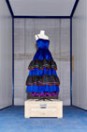
Jules François Crahay
Brüssel (BE) > 23.02.2024 - 10.11.2024
The name Jules François Crahay may not ring a bell, and yet… This Belgian is ‘one of the last geniuses of couture’. For the first time, and thanks to original research, the museum is devoting an exhibition to him. An opportunity to discover or rediscover this unfairly forgotten couturier. Jules François Crahay began his career in Liège before making his mark in the Parisian world of haute couture. In 1959, his first collection for the Nina Ricci fashion house triggered a wave of praise and orders. The press compared him to Christian Dior. Subsequent collections confirmed his reputation as a master couturier, appreciated by Claudia Cardinale, Princess Paola and Jackie Kennedy. He joined the Maison Lanvin, where he created around 40 haute couture collections and more ready-to-wear garments.
Text- und Bildquelle: Museumswebsite
Veranstalter/ Ort
Fashion & Lace Museum
Rue de la Violette 12
1000 Brüssel
Belgien
weitere Infos: www.fashionandlacemuseum.brussels/en/expos/6027

The Biba Story, 1964-1975
London (GB) > 22.03. - 08.09.2024
In the summer of 1963, fashion illustrator Barbara Hulanicki established a mail-order company selling affordable fashion appealing to a new generation of young women, which she named Biba. The Biba Story explores how fashion phenomenon Biba blossomed to become the world’s first lifestyle label, sparking a revolution in how people shopped and how Biba earned its spot as the brand that epitomises 1960s and 1970s fashion. The exhibition focuses on the years 1964, when the first Biba boutique opened, to 1975, when the legendary Big Biba closed its doors to the public. Displaying fantastic archival pieces of clothing, original photographs, film, and material all of which have been personally chosen by Barbara Hulanicki.
'It isn't just selling dresses, it's a whole way of life', Barbara Hulanicki, 1970.
Text- und Bildquelle: Museumswebsite
Veranstalter/ Ort
Fashion and Textile Museum
83 Bermondsey St
London SE1 3XF
Großbritannien
weitere Infos: www.fashiontextilemuseum.org/exhibitions/the-biba-story-1964-1975
Sheer: The diaphanous creations of Yves Saint Laurent
Paris (F) > 09.02. - 25.08.2024
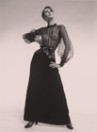
The exhibition Sheer: The diaphanous creations of Yves Saint Laurent will be on display at the Musée Yves Saint Laurent Paris from February 9 to August 25, 2024. It will be the second chapter of a story that began last summer at the Museum of Lace and Fashion in Calais. For the exhibition’s next stop, in Paris, the Musée Yves Saint Laurent Paris invited the curator Anne Dressen to be its artistic advisor; she will focus on transparency as a chosen artistic expression of Yves Saint Laurent. The exhibition has been designed by the architect Pauline Marchetti, whose work explores the intersection of perception and space. Few articles of clothing are entirely transparent. In theory, transparency is incompatible with the very function of clothing, which is to cover the body, conceal or protect it. Intrigued by this contradiction, and by the powerful role diaphanous fabrics could play in his work, Yves Saint Laurent began using materials such as chiffon, lace and tulle in the 1960s. Like a leitmotif, he regularly employed transparency during his forty creative years, at times alongside embroidered or opaque fabrics. He daringly reconciled these contradictions, allowing women to proudly and boldly assert their bodies.
Text- und Bildquelle: Museumswebsite
Veranstalter/ Ort
Musée Yves Saint Laurent Paris
5 avenue Marceau
Paris
Frankreich
weitere Infos: museeyslparis.com/en/exhibitions/yves-saint-laurent-transparences

Les Fleurs D’Yves Saint Laurent
Marrakech (MAR) > 02.03.2024 - 05.01.2025
The Musée Yves Saint Laurent Marrakech (mYSLm) is delighted to announce the opening, on March 2, 2024, of the exhibition Les Fleurs d’Yves Saint Laurent, which will coincide with the seventh anniversary―in October 2024―of the founding of the Yves Saint Laurent museums in Marrakech and Paris. For the first time, the two museums will prepare and mount a joint exhibition and catalogue project under the curatorship of Gaël Mamine and Olivier Saillard. Together, Olivier Saillard and Gaël Mamine are preparing a second exhibition, Les Fleurs d’Yves Saint Laurent, to be mounted simultaneously at the Musée Yves Saint Laurent Marrakech and the Musée Yves Saint Laurent Paris. The exhibition will focus on the passion that Yves Saint Laurent, as well as Pierre Bergé, had for nature. Saillard and Mamine will place lilies of the valley, bougainvilleas, roses, wheat, poppies and lilies on herbarium boards that could have been imagined by the couturier.
Text- und Bildquelle: Museumswebsite
Veranstalter/ Ort
Musée Yves Saint Laurent Marrakech
Rue Yves Saint Laurent
40090 Marrakech
Marokko
weitere Infos: www.museeyslmarrakech.com/en/expositions/permanente/

Viktor & Rolf – Fashion Statements
München (D) > 23.02. - 06.10.2024
Die Kunsthalle München zeigt die erste große Retrospektive des niederländischen Designerduos Viktor&Rolf in Deutschland. Mit atemberaubender Virtuosität loten Viktor Horsting und Rolf Snoeren seit über 30 Jahren immer wieder die Grenzen zwischen Couture und Kunst aus. Ihre Meisterwerke wurden von Künstler:innen wie Madonna, Tilda Swinton, Lady Gaga, Doja Cat und Cardi B getragen sowie in Ballettproduktionen und in einer Oper, unter Regie von Robert Wilson, in Szene gesetzt. Rund 100 der kühnsten Stücke des ebenso visionären wie leidenschaftlichen Duos werden nun in einer spektakulären Inszenierung erlebbar gemacht. Viele Kreationen sind zum ersten Mal ausgestellt – zusammen mit zahlreichen Videos, Skizzen und handgefertigten Porzellanpuppen, die mit den ikonischen Kreationen der Designer gekleidet sind, sowie mit Werken von renommierten Foto-Künstler:innen wie Andreas Gursky, Ellen von Unwerth oder Herb Ritts.
Text- und Bildquelle: Museumswebsite
Veranstalter/ Ort
Kunsthalle München
weitere Infos: www.kunsthalle-muc.de/vorschau
Mode aus der MOMU Sammlung
Antwerpen (B) > Dauerausstellung
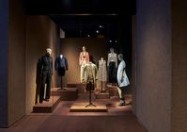
Die Sammlungspräsentation im Erdgeschoss beleuchtet die belgische und internationale Avantgardemode anhand von Silhouetten, Bild- und Archivmaterial aus der über 38 000 Objekte umfassenden MoMu-Sammlung. Um einen größtmöglichen Teil der MoMu-Sammlung - von zeitgenössischer Mode bis hin zu historischer Kleidung, Textilien und Accessoires - zeigen zu können, wird die Sammlungspräsentation regelmäßig geändert. Durch die Sammlungspräsentation wird das MoMu fortan zu einem durchgehend geöffneten festen, dynamischen, überraschenden und inspirierenden Treffpunkt für jeden Besucher. Aufgrund des mangelnden Ausstellungsraums konnte die umfangreiche Museumssammlung in der Vergangenheit nicht immer in vollem Umfang gewürdigt werden. Heute kann das renovierte Museum der Geschichte der belgischen und internationalen Mode endlich einen festen Platz einräumen. Damit die Sammlungspräsentation auch in Zukunft ein dynamischer Ort voller Überraschungen ist und bleibt, wird die MoMu-Sammlung nicht nur kontinuierlich mit Kreationen von aufstrebenden Talenten ergänzt, sondern auch Lücken in der historischen Sammlung geschlossen. In der Sammlungspräsentation entdecken Besucher die Entwicklung der belgischen und internationalen Avantgardemode. Die Ausstellung zeigt Kleidung und Accessoires, sowie Einladungen zu Modeshows und Archivbilder. Ein einleitender Dokumentarfilm geht tiefer auf die Entstehung der Qualitätsmarke „Belgische Mode” seit dem Aufkommen der „Antwerp Six” in den 1980er Jahren ein. Sie unterstreicht auch die Bedeutung der Modeabteilung der Königlichen Akademie der Schönen Künste in Antwerpen mit den jährlich wechselnden Kreationen der Modestudenten.
Text- und Bildquelle: Museumswebsite
Veranstalter/ Ort
MoMu Antwerpen
Nationalestraat 28
2000 Antwerpen
Belgien
weitere Infos: www.momu.be/de/exhibitions/sammlungprasentation
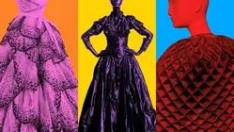
Fashioning San Francisco: A Century of Style
San Francisco (USA) > 20.01. - 11.08.2024
Explore the history of San Francisco through fashion. Featuring one of the most iconic collections of 20th- and 21st-century women’s clothing in the United States, this exhibition includes 100 collection highlights, along with local loans of high fashion and haute couture. The first major presentation of our costume collection in over 35 years, it showcases designs from French couturiers, Japanese avant-garde designers, and other pillars of the fashion industry, including Christian Dior, Alexander McQueen, Christopher John Rogers, Comme des Garçons, and Rodarte. The designs on view, many never shown before, reflect San Francisco’s long-standing tradition of self-expression through fashion.
In San Francisco — a city with a vibrant history of embracing radical clothing styles — fashion mavericks have perennially supported boundary-pushing designers. These advocates include retailers, such as Susan Foslien, Sherri McMullen, or the Ospital family of Modern Appealing Clothing (MAC); individuals like Georgette “Dodie” Rosekrans, who famously financed John Galliano’s early collections; and the Fine Arts Museums of San Francisco, which preserve designers’ legacies in their permanent collection. Today, the Museums’ collection boasts avant-garde creations by the Japanese fashion designers Rei Kawakubo, Kei Ninomiya, Junya Watanabe, and Yohji Yamamoto as well as European innovators like Galliano, Jean Paul Gaultier, and Alexander McQueen.
Text - und Bildquelle: Museumswebsite (Foto: © Randy Dodson)
Veranstalter/ Ort
De Young Fine Arts Museum of San Fransisco
Golden Gate Park
50 Hagiwara Tea Garden Drive
San Francisco, CA 94118
USA
weitere Infos: www.famsf.org/exhibitions/fashioning-san-francisco
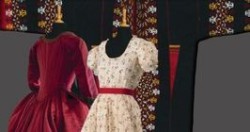
Colore, forma, bellezza. Le metamorfosi della moda femminile
Genua (I) > 11.11.2023 - 30.09.2024
Erweitert bis zum 30. September ist die Ausstellung eine faszinierende Reise durch die Modegeschichte zwischen Revolutionen und Revival, zwischen prächtigen Stoffen und raffinierten Accessoires. Die neue Einrichtung der Textilsammlungen, die im Zwischengeschoss des Palazzo Bianco untergebracht ist, führt die Öffentlichkeit auf einer verführerischen Reise, um die Ideale der Schönheit und die kontinuierlichen Veränderungen im Geschmack zwischen dem 17. und 20. Jahrhundert zu entdecken. Das weibliche Universum ist die Protagonistin dieser Reiseroute, die zwischen Ost und West windigt und die Vielfalt und Bedeutung der Civic Textile Collections durch eine Auswahl einiger der 3 Tausend Werke in der kontinuierlichen Erweiterung hervorhebt, die heute eine der wichtigsten Abschnitte der Strada Nuova Museen darstellen, die Museumsstruktur, die Museumsstruktur, die sich in der Kunstgeschichte und der Genoa zusammenfasst. Luxuriöse Kleidung und Modeaccessoires, manchmal echte kleine Kunstwerke, werden mit Gemälden, Drucken und anderen Objekten aus den Civic Collections kombiniert, in einer Reihe von Werken, die durch die sehr hohe exekutive Qualität und die Verwendung wertvoller Materialien geteilt werden, die auch das tägliche Leben einer Menge von Frauen erzählen, die uns vorausgegangen sind. Diese Erzählung gipfelt in einer außergewöhnlichen weiblichen Figur und einem vollen Eintauchen in der Vergangenheit: ein Zeitraum, der der napoleonischen Zeit gewidmet ist, und einer Frau aus dem Gewöhnlichen, die aus dieser Zeit eine der Protagonistinnen war, Anna Pierino Brignole-Sale (1765-1815). Großmutter von Maria Brignole-Sale, Herzogin von Galliera, Anna, die in den gequanzen Jahren des Endes der Genuesen Republik und der Annexion von Genua an das Französische Reich lebte, stand im Zentrum des zeitgenössischen politischen, künstlerischen und kulturellen Lebens und gleichzeitig einer faszinierenden Dame, die die weltliche Szene dominierte.
Text- und Bildquelle: Museumswebsite
Veranstalter/ Ort
Musei di Strada Nuova - Palazzo Bianco
Via Garibaldi,11
16124 Genua
Italien
weitere Infos: www.museidigenova.it/it/colore-forma-bellezza-le-metamorfosi-della-moda-femminile
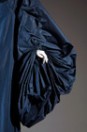
Statement Sleeves
New York City (USA) > 24.01. - 25.08.2024
Whether puffed, ruffled, split, or sheer, statement sleeves have been a ubiquitous fashion trend for the past decade. These dramatic, contemporary creations can enliven and update a wardrobe, yet many current sleeve styles have cycled in and out of fashion for decades, if not centuries. Although sleeves can be especially challenging to make, they also inspire countless creative ideas. Statement Sleeves takes an original approach to the history of fashion. The selected garments date from the 18th century to the present, but they are not presented chronologically. They are instead organized by type. Following an introduction to basic sleeve shapes–from gigot to raglan–visitors will encounter the myriad ways in which designers have reinterpreted and remixed sleeves through variations in material, shape, embellishment, and even functionality. More than sixty styles, all from the museum's permanent collection, emphasize how sleeves hold the power to define a look–in both the past and present.
Text- und Bildquelle: Museumswebsite
Veranstalter/ Ort
The Museum at FIT
New York City
USA
weitere Infos: www.fitnyc.edu/museum/exhibitions/index.php?exhibitions=upcoming
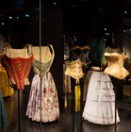
300 years of underwear
Amsterdam (NL) > bis 09.12.2024
under/wear is a Rijksmuseum Special Collections display tracing shifts in underwear trends between 1640 and 1940 – from linen underpants belonging to 17th-century Dutch ruler Hendrik Casimir I to early 20th-century stocking suspenders. Underclothing was purely functional in the 17th century, but from the 19th century onwards undergarment increasingly became subject to changes in fashion. This was the era of corsets, petticoats, crinolines, chemise undershirts and ‘directoire’ knickers.
Textquelle: Museumswebsite
Veranstalter/ Ort
Rijksmuseum Amsterdam Museumstraat 1
1071 XX Amsterdam
Niederlande
weitere Infos: www.rijksmuseum.nl/en/press/press-releases/300-years-of-underwear-at-the-rijksmuseum
Seite 4 von 11